
Hypothyroidism Diet Plan to Support Your Thyroid
Hypothyroidism (underactive thyroid) happens when the thyroid gland does not make enough thyroid hormone. This can slow metabolism, make you feel tired, cause weight gain, constipation, and other health issues. While there is no exact diet that cures hypothyroidism, eating the right foods and avoiding those that interfere with thyroid function can support your health and help manage symptoms.
This post gives you a simple, research-based Hypothyroidism Diet Plan that is easy to follow and good for life.
How Hypothyroidism Diet Plan Helps?
Your thyroid needs certain nutrients — like iodine, selenium, zinc, and vitamin D — to work well. Eating foods rich in these nutrients helps your body make and use thyroid hormones efficiently. At the same time, some foods may interfere with thyroid medication or hormone production if eaten in large quantities.
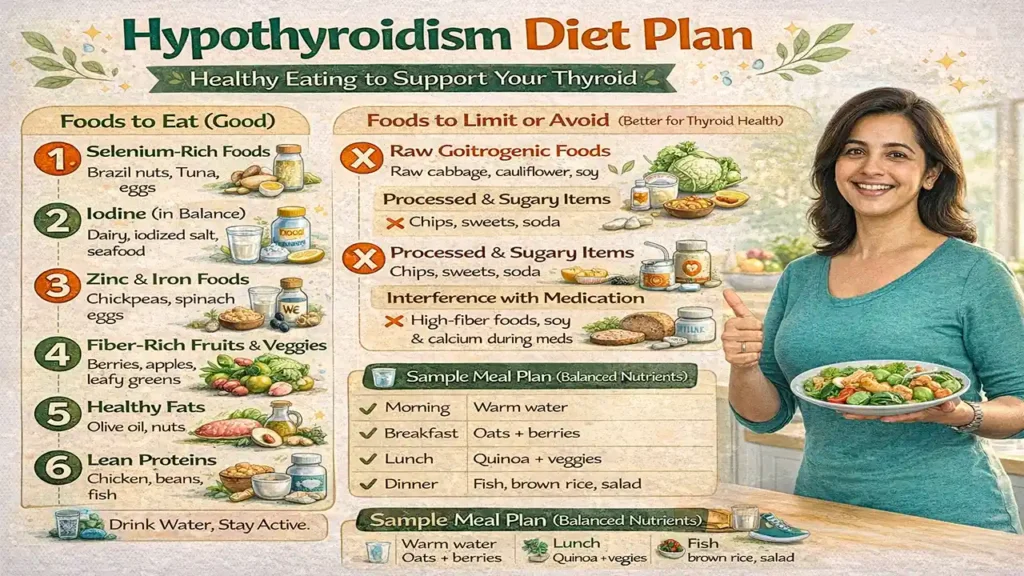
Foods to Eat (Good for Hypothyroidism)
1. Selenium-Rich Foods
Selenium helps convert thyroid hormone into its active form and protects the gland from oxidative stress.
✔ Brazil nuts (1–2 per day)
✔ Tuna, sardines
✔ Eggs, legumes
Adding selenium-rich foods supports hormone balance.
2. Iodine-Containing Foods (in Balance)
Iodine is essential for thyroid hormone production, but too much can be harmful — especially in Hashimoto’s thyroiditis or without medical guidance.
✔ Dairy (milk, yogurt, cheese)
✔ Eggs
✔ Seafood (fish, shrimp)
✔ Iodized salt (used in moderation)
3. Zinc and Iron Foods
Zinc and iron help thyroid hormone production and metabolism.
✔ Pumpkin seeds, lentils, chickpeas
✔ Spinach, red meat (lean)
✔ Shellfish (shrimp, oysters)
Including these minerals supports hormone pathways.
4. Fiber-Rich Fruits and Vegetables
Constipation is common in hypothyroidism. Fiber helps digestion and keeps stools soft.
✔ Apples, berries, pears, citrus fruits
✔ Carrots, peppers, leafy greens (cooked)
✔ Oats, quinoa, brown rice
Fiber also supports heart and gut health.
5. Healthy Fats
Fats support hormone production and help reduce inflammation.
✔ Olive oil, avocados, nuts and seeds
✔ Fatty fish (salmon, mackerel)
Healthy fats are part of a balanced diet that supports metabolism.
6. Lean Proteins
Protein supports muscle mass and energy levels.
✔ Eggs
✔ Chicken, turkey
✔ Beans and lentils
Protein also supports stable blood sugar and overall metabolism.
Foods to Limit or Avoid (Better for Thyroid Health)
1. Goitrogenic Foods (in Large Amounts)
Goitrogens can interfere with iodine use when eaten raw or in excess. Cooking reduces their effects.
✖ Raw cabbage, cauliflower, Brussels sprouts, kale
✖ Soy products (tofu, soy milk)
✖ Pearl millet and other high-goitrogen millets
You don’t need to avoid these completely, but moderation and cooking help reduce the effect.
2. Ultra-Processed and Sugary Foods
Processed snacks and sugary drinks can increase inflammation and weight gain, which makes hypothyroid symptoms harder to manage.
✖ Chips, cookies, soda
✖ Packaged sweets and desserts
3. Foods That Interfere With Medication Absorption
Some foods can block thyroid hormone medicine absorption if taken at the same time.
⦿ Soy products
⦿ High-fiber foods (when taken right with medicine)
⦿ Iron or calcium supplements taken close to medication
Tip: Take your thyroid medicine on an empty stomach, at least 30–60 minutes before breakfast, and wait a few hours before eating these items.
Sample Hypothyroidism Diet Plan
| Meal | What to Eat |
|---|---|
| Morning (Empty Stomach) | Warm water + light walk |
| Breakfast | Oats with berries or eggs + fruit |
| Mid-Morning Snack | Handful of nuts (Brazil nuts, almonds) |
| Lunch | Brown rice/quinoa + dal + cooked veggies + lean protein |
| Evening Snack | Fresh fruit or yogurt |
| Dinner | Vegetable soup + grilled chicken or fish + salad |
| Before Bed | Warm milk (optional) |
This plan includes balanced nutrients for thyroid support and good digestion.
Tips for Best Results
✔ Stay hydrated by drinking enough water.
✔ Avoid eating large amounts of raw cruciferous vegetables.
✔ Take thyroid medication first thing in the morning on an empty stomach.
✔ Space iron or calcium supplements at least 4 hours apart from thyroid medication.
✔ Include physical activity like daily walking or yoga.
Final Thought
A balanced, nutrient-rich diet supports thyroid function, energy, digestion, and overall well-being when combined with proper medication and healthy habits. Every person’s needs may be different, so consult a healthcare provider or dietitian to personalize your hypothyroidism diet plan.
FAQs
Q: Can diet cure hypothyroidism?
A: No — diet supports thyroid health but does not replace medication. Medication is essential for most people with hypothyroidism.
Q: Is iodine good for hypothyroidism?
A: Yes, in balanced amounts. Too much iodine can be harmful, so talk with your doctor first.
Q: Is gluten bad for thyroid?
A: Not for everyone, but if you have gluten sensitivity or celiac disease, a gluten-free diet may help.
Q: Can hypothyroidism cause weight gain?
A: Yes — slow thyroid activity can slow metabolism. A healthy diet and exercise help manage weight.
Q: Should I eat raw cruciferous vegetables?
A: Small amounts are fine, but cooking them reduces their potential to interfere with thyroid function.