
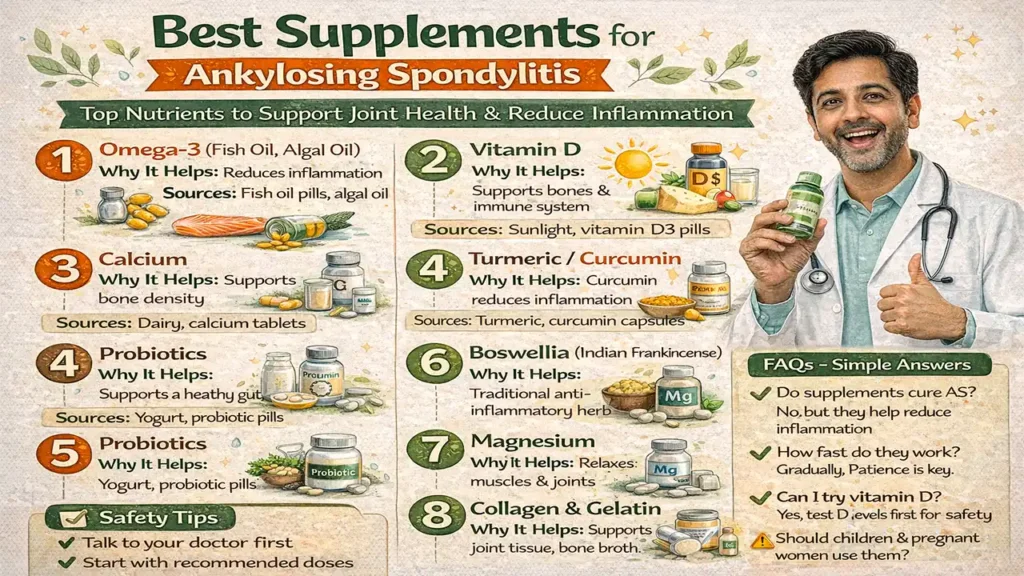

Best Supplements for Ankylosing Spondylitis to Support Joint Health
Ankylosing Spondylitis (AS) is a chronic inflammatory condition that affects the spine and other joints. While medicines prescribed by your doctor are the main treatment, certain vitamins, minerals, and natural supplements may support inflammation control, bone health, and immunity when used safely. Scientific studies and clinical nutrition guidelines show some supplements can help reduce symptoms and support overall health.
Important Note: Supplements are not a cure for AS, nor should they replace medication or exercise prescribed by your doctor. Always talk to your healthcare provider before starting any supplement, especially if you are taking other medicines.
1. Omega-3 Fatty Acids (Fish Oil / Algal Oil)
Why It Helps
Omega-3s contain EPA and DHA, which are long-chain fatty acids that help reduce inflammation in the joints. Clinical studies show omega-3 supplements may help lower inflammatory markers and reduce pain and stiffness in inflammatory arthritis.
Sources
- Fish oil capsules
- Algal oil (vegetarian source)
Research
Omega-3s have anti-inflammatory effects and may improve symptoms of inflammatory arthritis when taken regularly.
2. Vitamin D
Why It Helps
Many people with AS have low vitamin D levels, which is linked to weaker bones and increased inflammation. Vitamin D helps the body absorb calcium, supports immunity, and may reduce inflammatory activity.
Sources
- Vitamin D3 supplements
- Sunlight exposure
Research
Low vitamin D levels are common in people with spondyloarthropathies, and supplementation shows benefits for bone and immune health.
3. Calcium
Why It Helps
Calcium is essential for strong bones. People with AS may have a higher risk of low bone density. Adequate calcium supports bone strength and reduces the risk of fractures.
Sources
- Calcium tablets
- Dairy or fortified foods
Research
Calcium, especially when paired with vitamin D, supports bone health and helps prevent bone loss.
4. Turmeric / Curcumin
Why It Helps
Turmeric contains curcumin, a natural compound with powerful anti-inflammatory properties. Curcumin may help reduce pain and inflammation, especially in joint conditions.
Sources
- Curcumin capsules
- Turmeric powder (with black pepper for absorption)
Research
Curcumin has been studied for its potential to reduce inflammatory markers in joint disorders, though more large clinical trials are ongoing.
5. Probiotics
Why It Helps
Probiotics help maintain a healthy gut microbiome. Some evidence suggests that gut bacteria may play a role in immune-mediated conditions like AS. Healthy gut flora may support immune balance and digestion.
Sources
- Probiotic capsules
- Yogurt with live cultures
Research
While direct evidence specifically for AS is limited, probiotics support gut health and immune function, which can positively influence inflammatory conditions.
6. Boswellia (Indian Frankincense)
Why It Helps
Boswellia serrata has been used traditionally for joint pain and inflammation. It contains compounds that may inhibit inflammatory enzymes in the body.
Sources
- Boswellia extract capsules
Research
Some studies suggest Boswellia may reduce pain and improve joint function in inflammatory arthritis, though more research is needed.
7. Magnesium
Why It Helps
Magnesium supports muscle and nerve function, reduces muscle cramps, and can help relax tight muscles around the spine and joints.
Sources
- Magnesium citrate or glycinate supplements
Research
Magnesium is important for muscle relaxation and nerve support, and deficiencies may worsen muscle tension and pain.
8. Collagen and Gelatin
Why It Helps
Collagen is a structural protein that supports connective tissue and joints. Some people find collagen supplements help with joint comfort.
Sources
- Hydrolyzed collagen supplements
Research
Some evidence suggests collagen supplements may help improve joint comfort in osteoarthritis, though evidence in AS is limited and mixed.
How to Use Supplements Safely
✔ Talk to your doctor first, especially if you are on medication.
✔ Check for allergies or interactions with other medicines.
✔ Start with recommended doses as per label or doctor’s advice.
✔ Supplements work gradually — give them consistent time to show effects.
Final Tip
Supplements can be a supportive part of AS management when combined with prescribed medication, regular exercise, physical therapy, and healthy eating. Always work with your healthcare provider to create a plan that is safe and effective for you.
FAQs
Q: Do supplements cure Ankylosing Spondylitis?
A: No. Supplements help reduce inflammation and support health, but they do not cure AS.
Q: How fast do supplements work?
A: Effects are gradual and may take weeks to months. Patience and consistency matter.
Q: Are omega-3 supplements better than eating fish?
A: Whole foods like fish are great, but omega-3 supplements ensure consistent intake, especially for vegetarians.
Q: Can I take vitamin D without testing my levels?
A: It’s best to test vitamin D levels with a doctor before long-term supplementation.
Q: Should children or pregnant women use these supplements?
A: Only under medical supervision.