
Diet Chart for Piles: Best Food Guide to Reduce Pain, Bleeding, and Constipation in Piles
Piles, also called hemorrhoids, happen when veins around the anus become swollen and painful. One of the main reasons piles become worse is constipation and hard stools. That is why diet plays a very important role in piles management. A proper diet can soften stools, reduce pressure during bowel movement, and help healing. Doctors and clinical studies agree that high-fiber foods, enough water, and gentle digestion are the keys to piles relief.
This post explains what to eat, what to avoid, a simple daily diet chart, and common food-related questions, in very easy language.
Why Diet Is Important for Piles Patients
When stools are hard, a person needs to strain while passing stool. This strain increases pressure on the veins and makes piles more painful. A good diet helps by:
- Making stools soft and bulky
- Improving digestion
- Reducing inflammation and irritation
- Preventing bleeding and itching
Fiber-rich foods and fluids are the foundation of piles care.
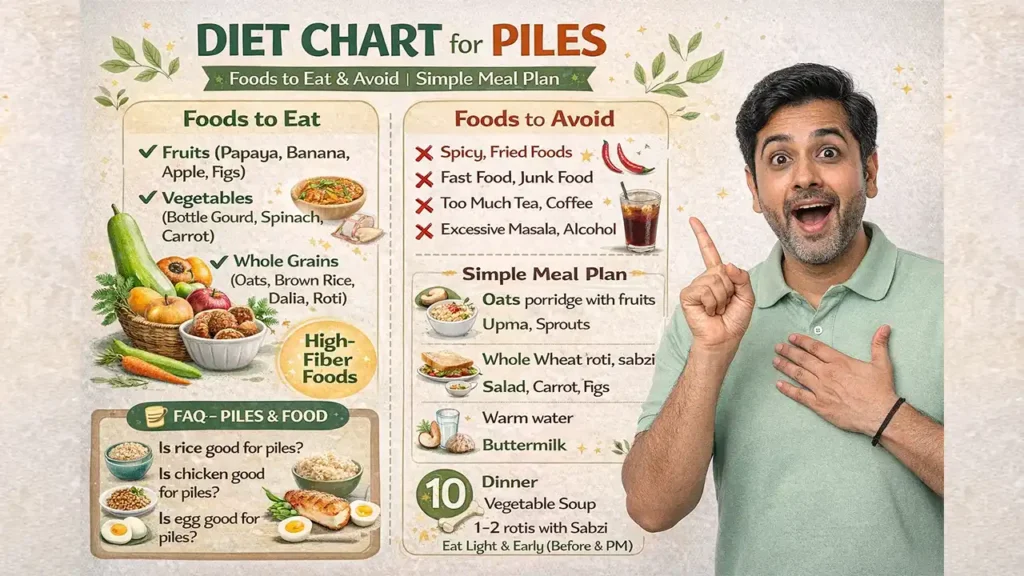
Piles Food to Eat (Best Foods for Healing)
Foods that are high in fiber and easy to digest are best for piles patients.
Fruits
- Papaya
- Apple (with peel)
- Pear
- Banana (ripe)
- Orange
- Figs (soaked overnight)
These fruits soften stools and improve bowel movement.
Vegetables
- Bottle gourd (lauki)
- Pumpkin
- Spinach
- Carrot
- Beetroot
- Ridge gourd (tori)
Cook vegetables lightly to make them easy to digest.
Whole Grains
- Oats
- Brown rice
- Whole wheat roti
- Dalia (broken wheat)
These provide fiber and prevent constipation.
Fluids
- Warm water
- Coconut water
- Buttermilk
- Vegetable soups
Drink water throughout the day to keep stools soft.
Piles Food to Avoid (Foods That Make Piles Worse)
Some foods can cause constipation, gas, or irritation and should be limited or avoided.
- Spicy food
- Fried food
- Fast food and junk food
- Red chili, excessive masala
- Alcohol
- Too much tea or coffee
- White bread and bakery items
- Cheese in excess
These foods can increase burning sensation, swelling, and bleeding.
Simple Diet Chart for Piles Patients
Breakfast for Piles Patient
- Oats porridge with fruits
- Vegetable upma
- Whole wheat toast with vegetables
- Papaya or soaked figs
- Warm water after waking up
Breakfast should always be light and fiber-rich.
Lunch for Piles Patient
- 2 whole wheat rotis or brown rice
- Dal or curd
- One bowl cooked vegetables
- Salad (carrot, cucumber)
- Buttermilk
Evening Snack for Piles Patient
- Fruits
- Roasted chana
- Coconut water
Dinner for Piles Patient
- Light food only
- Vegetable soup
- 1–2 rotis with sabzi
- Avoid heavy or spicy food at night
Eat dinner at least 2–3 hours before sleeping.
Lifestyle Tips Along with Diet
- Do not strain during toilet
- Go to toilet when urge comes
- Walk for 20–30 minutes daily
- Avoid sitting for long hours
- Do not sit too long on the toilet seat
These habits support diet and improve piles faster.
Final Advice
Diet alone cannot cure piles, but it controls symptoms, prevents worsening, and supports healing. A fiber-rich diet, enough water, and simple lifestyle changes are clinically proven to help piles patients feel better and avoid surgery in early stages. Always consult a doctor if there is heavy bleeding or severe pain.
FAQs
Which juice is good for piles?
Papaya juice, carrot juice, beetroot juice, and bottle gourd juice are good. They improve digestion and reduce constipation.
Is chicken good for piles?
Yes, boiled or grilled chicken is okay in moderation. Avoid spicy or fried chicken.
Is egg good for piles?
Yes, eggs are safe if eaten boiled. Too many eggs may cause constipation, so balance is important.
Is fish good for piles?
Yes, fish is good because it is easy to digest and has healthy fats. Avoid deep-fried fish.
Is potato good for piles?
Boiled potato in small amounts is okay. Fried potatoes should be avoided as they worsen constipation.
Is rice good for piles?
Brown rice is better than white rice. White rice can be eaten in small quantity with vegetables and dal.