
Eat Right for Neck Health: Easy Diet for Cervical Spondylosis
Cervical spondylosis is a very common health problem, especially in people who sit for long hours, use mobile phones for many hours, or work on computers for a long time. In this condition, the bones and discs of the neck slowly get weak or worn out due to age or lifestyle. This leads to neck pain, stiffness, shoulder pain, headache, and sometimes pain or numbness in the arms and fingers.
Doctors say that cervical spondylosis cannot be fully cured, but it can be controlled if you follow the right habits. One of the most important habits is eating the right food. A good diet helps reduce pain, control inflammation, relax neck muscles, and support bone health.
In this post, I will explain a simple and easy-to-follow diet for cervical spondylosis. The post will use very easy English so that everyone can understand. I will also give simple examples of what to eat every day and what to avoid. At the end, there are short FAQs.
This diet plan is based on general health science information, doctor recommendations, and recent updates from trusted health websites and hospitals.
Why Diet Is Important for Cervical Spondylosis
When someone has cervical spondylosis, the bones, muscles, and discs in the neck area become weak or stressed. If you eat the right food, you give your body the nutrients it needs to heal and stay strong. The right diet can help:
- Reduce body inflammation
- Support stronger bones
- Relax tight muscles
- Improve blood flow
- Reduce extra weight
- Give energy for exercise and physiotherapy
Food cannot cure the condition completely, but it can reduce pain and help recovery.
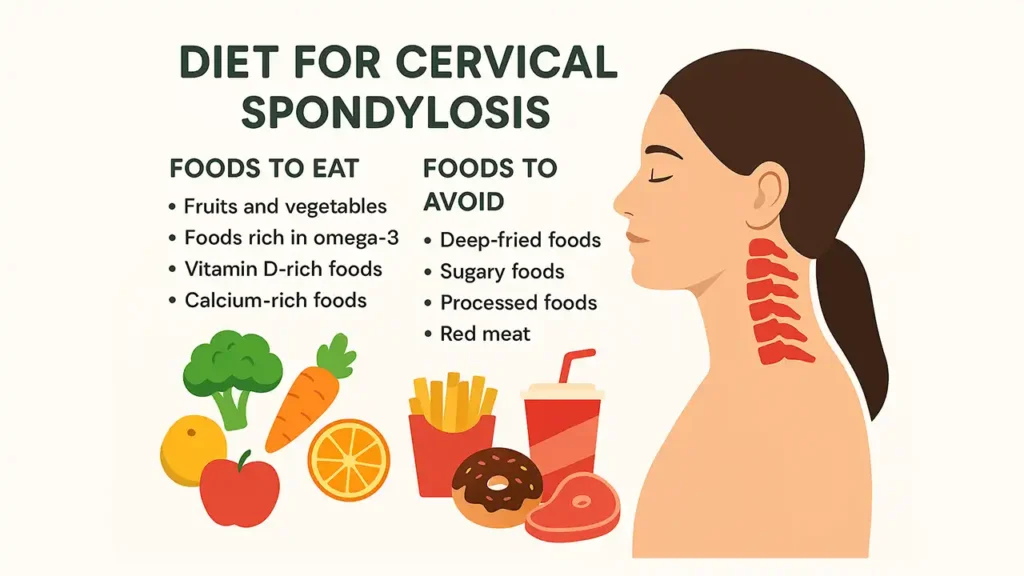
Foods You Should Eat More
Below are the simple foods that help in cervical spondylosis. These foods keep your bones and muscles strong and reduce inflammation.
1. Fruits and Vegetables
Fruits and vegetables contain vitamins, minerals, and antioxidants which help reduce pain and inflammation.
Best choices include:
- Spinach
- Broccoli
- Carrots
- Tomatoes
- Oranges
- Papaya
- Berries
- Apples
- Beetroot
Try to eat 3–4 servings of vegetables and 2 servings of fruits every day.
2. Foods Rich in Omega-3 (for pain and inflammation)
Omega-3 is a special type of healthy fat that reduces swelling in the neck area.
Best foods:
- Salmon
- Mackerel
- Sardines
- Flax seeds
- Chia seeds
- Walnuts
These foods help reduce stiffness and pain in the neck.
3. Vitamin D-Rich Foods
Vitamin D helps your bones stay strong and also helps your body absorb calcium.
Best foods:
- Egg yolk
- Fortified milk
- Fortified cereals
- Oily fish
- Mushroom (sun-exposed)
Doctors say most people have low vitamin D, so sunlight is also very important.
4. Calcium-Rich Foods
Calcium is needed for strong bones. If bones are strong, neck pressure reduces.
Best sources:
- Milk
- Curd (yogurt)
- Paneer
- Ragi
- Almonds
- Sesame seeds (til)
- Green leafy vegetables
Try to eat at least 1–2 servings of calcium-rich foods daily.
5. Lean Protein Foods
Protein builds strong muscles around the neck and shoulders. Strong muscles reduce pain.
Good sources:
- Eggs
- Beans
- Dal
- Chickpeas
- Fish
- Chicken (lean)
- Soya or tofu
Protein should be included in every meal.
6. Healthy Fats
Healthy fats support the nerves and reduce inflammation.
Examples:
- Olive oil
- Coconut oil (moderate)
- Avocado
- Nuts
- Seeds
Use small amounts of these fats for cooking.
7. Whole Grains
Whole grains give steady energy and help in weight control.
Good choices:
- Brown rice
- Whole wheat
- Oats
- Millets
- Quinoa
- Barley
Avoid refined grains like white bread and maida.
8. Water and Hydration
If your body is dehydrated, your spinal discs also lose moisture and become stiff. Drinking enough water helps keep your neck flexible.
Drink 6–8 glasses of water daily.
Foods You Should Avoid
Some foods increase inflammation and make neck pain worse. These foods should be avoided or reduced.
1. Deep-Fried Foods
Fried foods increase swelling and slow healing.
Examples:
- Pakoras
- French fries
- Samosa
- Fried chicken
- Poori
Limit fried food as much as possible.
2. Sugary Foods
Sugar increases inflammation and can increase body weight.
Avoid:
- Cakes
- Sweets
- Chocolates
- Soft drinks
- Sweet biscuits
3. Processed and Packaged Foods
Packaged foods contain unhealthy fats, chemicals, and too much salt.
Examples:
- Chips
- Instant noodles
- Packaged snacks
- Frozen fast food
- Ready-made gravies
4. Red Meat (too often)
Red meat takes longer to digest and may increase inflammation.
Try to replace it with chicken or fish.
5. Too Much Caffeine
Excess tea or coffee can reduce calcium in bones.
Limit to 1–2 cups per day.
6. Alcohol and Smoking
Both are harmful to bones and muscles. They delay healing and increase pain.
Simple Everyday Meal Plan for Cervical Spondylosis
Here is a very simple and easy diet plan you can follow every day:
Breakfast Ideas
- Oats with milk and fruits
- Vegetable upma
- 2 boiled eggs + 1 fruit
- Chapati + paneer bhurji
- Sprouts bowl
Mid-Morning Snack
- 1 fruit
- A handful of nuts
- Coconut water
Lunch Ideas
- Brown rice or roti
- Dal or chicken curry
- Cheera/green vegetable
- Curd
- Salad
Evening Snack
- Roasted chana
- Fruit bowl
- Green tea
Dinner Ideas
- Vegetable soup + roti
- Grilled fish + salad
- Stir-fried vegetables + paneer
- Khichdi with vegetables
Before Bed (Optional)
- A small glass of warm milk
Helpful Tips to Reduce Neck Pain Through Diet
- Eat small and balanced meals.
- Avoid long gaps between meals.
- Do not eat very heavy meals at night.
- Reduce spicy, oily foods.
- Maintain a healthy weight.
- Combine diet with simple stretching exercises.
- Take vitamin D supplements only if a doctor suggests.
Lifestyle Tips Along with Diet
Only diet is not enough. You also need simple habits:
1. Correct Sitting Posture
Do not bend your neck too much while using your phone.
2. Take Breaks While Working
Take a 2–3 minute break every 30 minutes.
3. Do Neck Exercises
Stretch your neck slowly every day.
4. Sleep on a Good Pillow
Use a thin pillow or orthopedic pillow.
5. Avoid Carrying Heavy Bags
Heavy bags strain your neck muscles.
Important Note About Supplements
Supplements are only needed if your doctor says so. There is no need for high-dose tablets unless a test shows deficiency.
Safe supplements (only with doctor advice):
- Vitamin D
- Calcium
- Omega-3
- Magnesium
Never take supplements on your own.
Conclusion
Cervical spondylosis needs a proper lifestyle, good diet, correct posture, and simple exercise. The right food will not cure the condition but can make a big difference in your pain level. By eating more fruits, vegetables, whole grains, fish, nuts, and dairy, and by avoiding fried and sugary foods, you can support your neck health and live a more comfortable life.
Short FAQs
Q1. Can diet cure cervical spondylosis?
No. Diet cannot cure it but can reduce pain and stiffness. It helps your bones, muscles, and nerves stay healthy.
Q2. What is the best fruit for cervical pain?
Orange, papaya, berries, apple, and pineapple are the best because they reduce inflammation.
Q3. Can milk help in cervical spondylosis?
Yes. Milk gives calcium and vitamin D (if fortified), which help bone strength.
Q4. Are bananas good?
Yes, bananas help muscle relaxation because they contain magnesium and potassium.
Q5. What foods make cervical pain worse?
Fried food, sugar, soft drinks, packaged snacks, and too much tea or coffee.
Q6. Is coffee bad for cervical pain?
1 cup is okay. But too much coffee removes calcium from bones and increases tension.
Q7. Can drinking water reduce neck pain?
Yes. Water keeps your spinal discs hydrated and flexible.