
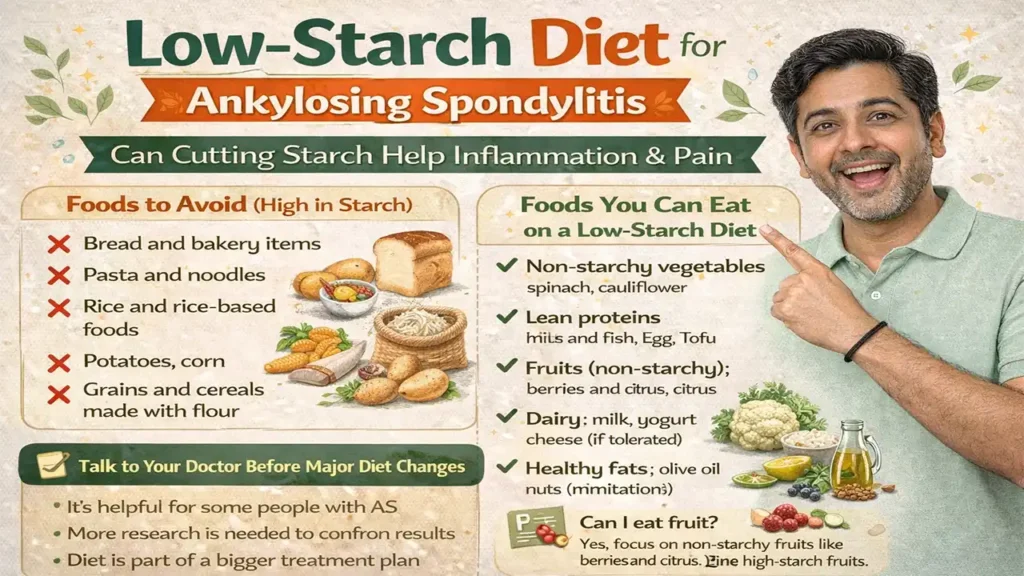

Low Starch Diet for Ankylosing Spondylitis Help Inflammation & Pain?
Ankylosing spondylitis (AS) is a type of chronic inflammatory arthritis that mainly affects the spine and joints. While there is no specific diet that cures AS, many people have found that certain eating patterns help reduce inflammation and symptoms. One of the diets that has gained interest is the Low Starch Diet for Ankylosing Spondylitis, which focuses on reducing starchy foods and increasing anti-inflammatory choices.
What Is a Low Starch Diet?
A low-starch diet means you cut back on foods that are rich in starch (a type of carbohydrate) and focus more on lean proteins, vegetables, fruits, and non-starchy foods. This idea became known with the “London AS diet,” which limits starch to reduce the amount of certain gut bacteria that may trigger inflammation in people with AS.
The theory is that some starch-eating bacteria in the gut, especially Klebsiella pneumoniae, may be linked with immune responses that worsen inflammation in people with AS. Reducing starch in the diet is thought to lower the growth of these bacteria and may help ease symptoms.
How Could a Low-Starch Diet Help AS?
1. May Reduce Inflammatory Triggers
Starchy foods (like bread, pasta, rice, potatoes) can feed certain bacteria in the gut that may contribute to inflammation. Some research shows that lowering starch intake can reduce these bacteria and reduce inflammatory markers like IgA and ESR in people with AS.
2. Supports Gut Microbiome Balance
The gut microbiome — the mix of bacteria in your digestive system — plays an important role in immune signaling. A low-starch diet may help shift the gut environment in a way that reduces immune triggers linked to joint inflammation.
3. Encourages Healthy Foods
Reducing starch often makes people eat more vegetables, lean proteins, and healthy fats — foods that some studies show can support lower inflammation and overall joint health.
What Foods to Avoid (High in Starch)
If you are trying a low-starch diet, the following foods are often limited:
- Bread and bakery items
- Pasta, noodles
- Rice and rice-based foods
- Potatoes, corn, beets
- Grains and cereals made with flour
- Starchy fruits like bananas (when high amounts)
What Foods You Can Eat on a Low-Starch Diet
You can fill your plates with:
- Non-starchy vegetables: spinach, broccoli, cauliflower, peppers
- Lean proteins: chicken, fish, eggs, tofu
- Fruits (non-starchy): berries, melons, citrus
- Dairy: milk, yogurt, cheese (if tolerated)
- Healthy fats: olive oil, nuts (moderation)
Does a Low-Starch Diet Work for Everyone?
There is some research and clinical reports that suggest a low-starch diet may help reduce symptoms and inflammation in AS, possibly by reducing bacteria linked with autoimmune responses. In one early study, people following this diet for months reported lower inflammatory markers and improvements in symptoms.
However, larger and more rigorous clinical trials are still being done to confirm how effective this approach is compared to other diets. Some reports find mixed results, and many doctors explain that diet is just one part of a bigger treatment plan that includes medicine, exercise, and lifestyle changes.
How to Try a Low-Starch Diet Safely
If you want to try it:
✔ Try the diet for at least 8–12 weeks consistently
✔ Keep a food and symptom diary to track changes
✔ Focus on whole foods, veggies, lean proteins, and healthy fats
✔ Talk to your doctor or dietitian before major dietary changes
✔ Make sure you get enough calories and nutrients while lowering starch
Because starch is a major energy source, it’s important to replace those calories with nutrient-rich foods so you don’t lose too much weight unintentionally.
Bottom Line
A low-starch diet may help some people with ankylosing spondylitis feel better by lowering inflammation and supporting a healthier gut environment. While more research is needed, early studies and clinical experience suggest that limiting high-starch foods and eating more veggies, lean proteins, and non-starchy fruits may be a good part of an overall anti-inflammatory lifestyle.
FAQs
Q: Is a low-starch diet proven to cure AS?
A: No. There is not enough strong research to say it cures AS, but some small studies and clinical reports show it may help reduce inflammation and symptoms in some people.
Q: How long should I try it before seeing results?
A: Effects may take weeks to months, and many people study results after 3–6 months of consistent low starch eating.
Q: Can I eat fruits on this diet?
A: Yes — but focus on non-starchy fruits like berries and citrus. High-starch fruits like bananas may be limited.
Q: Is low-starch the same as low-carb?
A: Not always. A low-starch diet focuses on reducing starch specifically, while low-carb also limits other carbohydrates like sugars and some fibers.
Q: Should everyone with AS try this?
A: Not necessarily. Diets work differently for everyone. It’s best to talk with a healthcare provider before major changes.